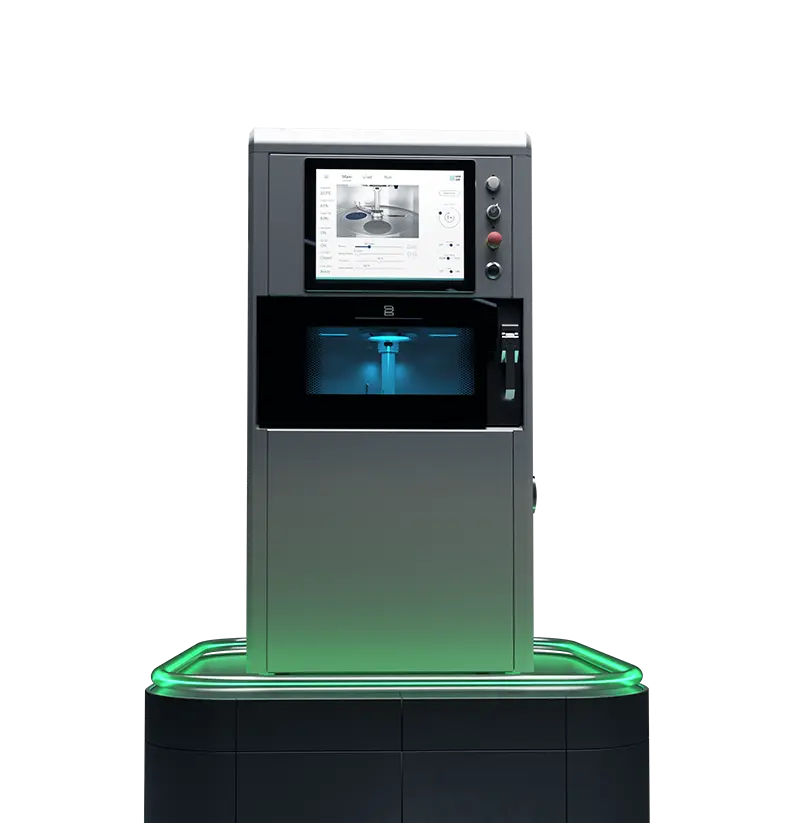
The quality of 3D printing metal powder is crucial for precise, stable results. Particle size, flowability, and purity directly affect part quality, process reliability, and powder reusability.
This article explains what makes high-quality powder and how systems like 2Sieve and 2Clean help recycle and maintain it for efficient, sustainable production.
Metal Powder for 3D Printing
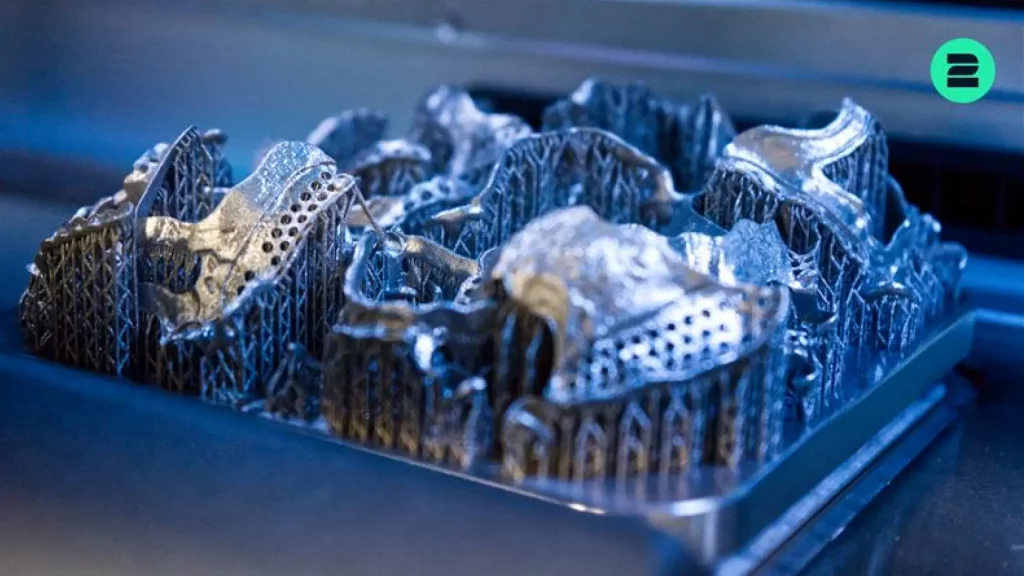
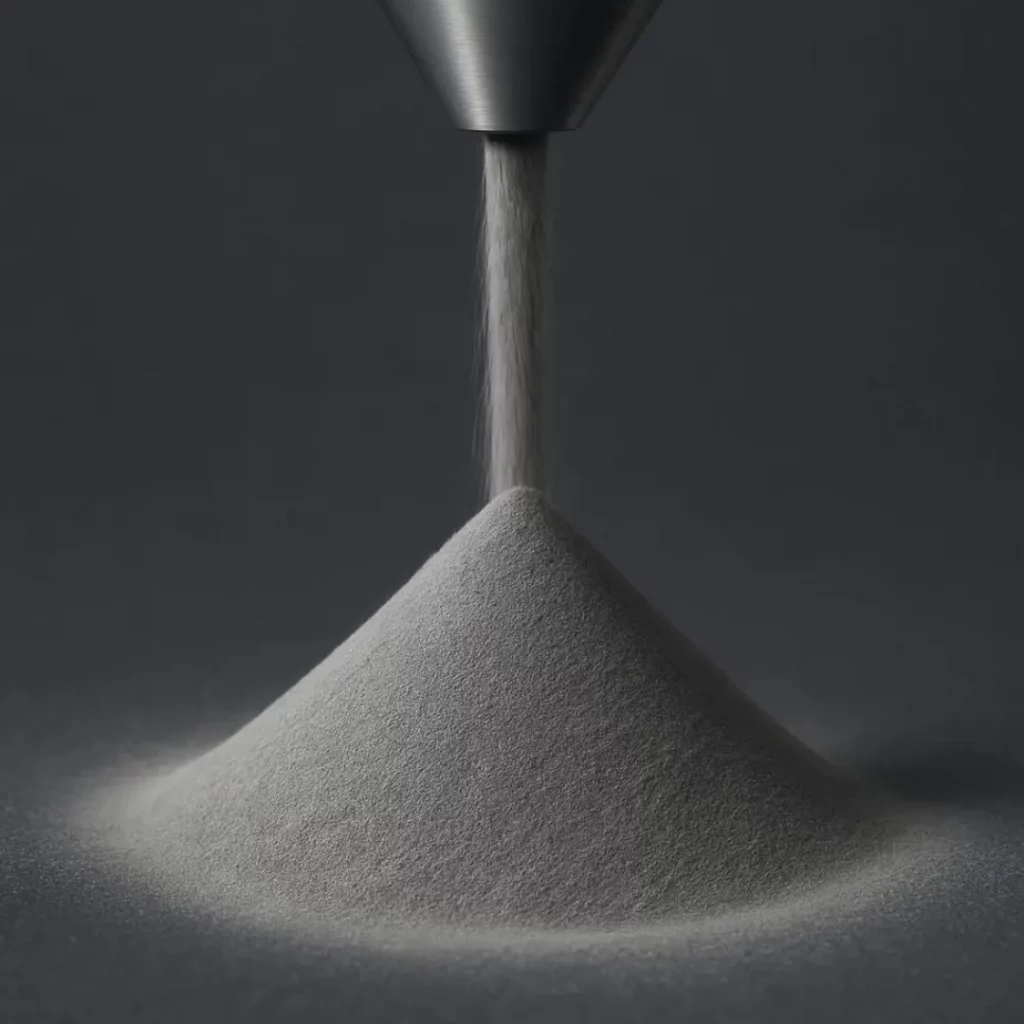
Metal powder for 3D printing is the foundation of Laser Powder Bed Fusion (LPBF), where the part is built layer by layer. To ensure each layer is formed accurately and without defects, the powder must meet specific requirements.
High-Quality Metal Powder Ensures:
- Uniform layer formation
Enables stable, dense parts free of defects. - Smooth surfaces
Homogeneous, spherical particles lead to improved surface quality. - High density
Reduces porosity and increases the mechanical strength and load-bearing capacity of the parts. - Efficient printing process
Optimized flowability allows for smooth printing, reduces scrap, and shortens cycle times.
You are currently viewing a placeholder content from YouTube. To access the actual content, click the button below. Please note that doing so will share data with third-party providers.
More InformationKey Properties of 3D Printing Metal Powder
Small, consistent grains (15–45 µm) ensure dense and stable layers.
Spherical particles promote good flowability and even distribution.
Crucial for clean layer formation and reliable printing.
Fewer defects thanks to low moisture and absence of contaminants.
High density enables stable parts and an efficient printing process.
Flowability
Flowability is one of the key properties of metal powder in the Laser Powder Bed Fusion process. It describes how well the powder flows under gravity or vibration. High flowability enables even powder distribution, reduces voids, and is essential for creating dense, stable layers in the process.

Metal Powder Recycling & Handling: 2Sieve & 2Clean
2Sieve – Efficient Sieving of Metal Powder
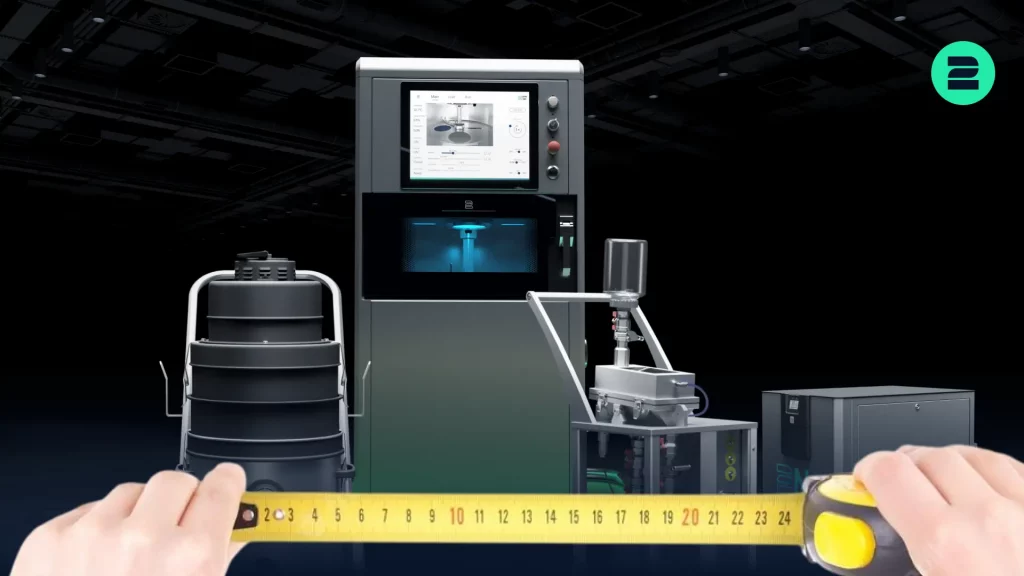
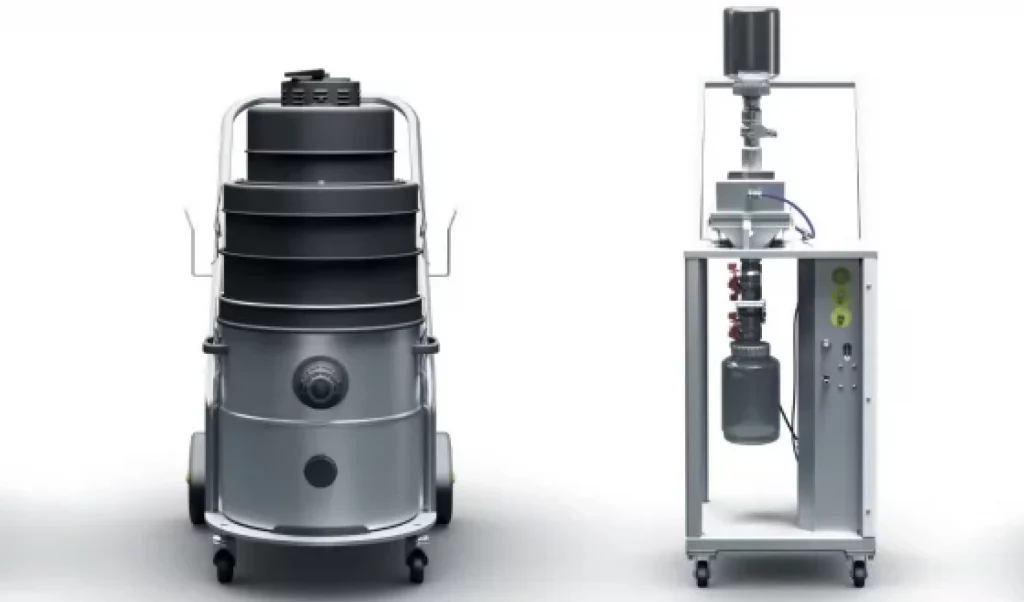
2Sieve is a specially developed, compact ultrasonic sieving system designed to gently clean used metal powder (after printing) collected in the overflow container. The system removes coarse agglomerates and foreign particles without damaging the remaining powder.
The result: the powder remains reusable and retains its high quality.
Thanks to its operation under protective gas (e.g., argon), 2Sieve is also suitable for reactive powders like titanium or aluminum.
You are currently viewing a placeholder content from YouTube. To access the actual content, click the button below. Please note that doing so will share data with third-party providers.
More InformationBenefits
- Suitable for reactive & non-reactive metal powders
- Low-dust, user-friendly operation
- Helps prevent printing errors and reduces costs by enabling powder reuse
2Clean – Post-Processing & Powder Recovery
2Clean is used after 3D printing to gently remove excess powder from printed parts and the build chamber. The recovered powder is then further processed using 2Sieve.
Note: 2Clean is suitable for non-reactive powders. For reactive powders like aluminum or titanium, a wet vacuum is recommended for proper handling.
You are currently viewing a placeholder content from YouTube. To access the actual content, click the button below. Please note that doing so will share data with third-party providers.
More InformationBenefits
- Clean build environment
- Reduced dust exposure for improved operator safety
- Efficient powder recovery for reuse
Conclusion – 3D Printing Metal Powder
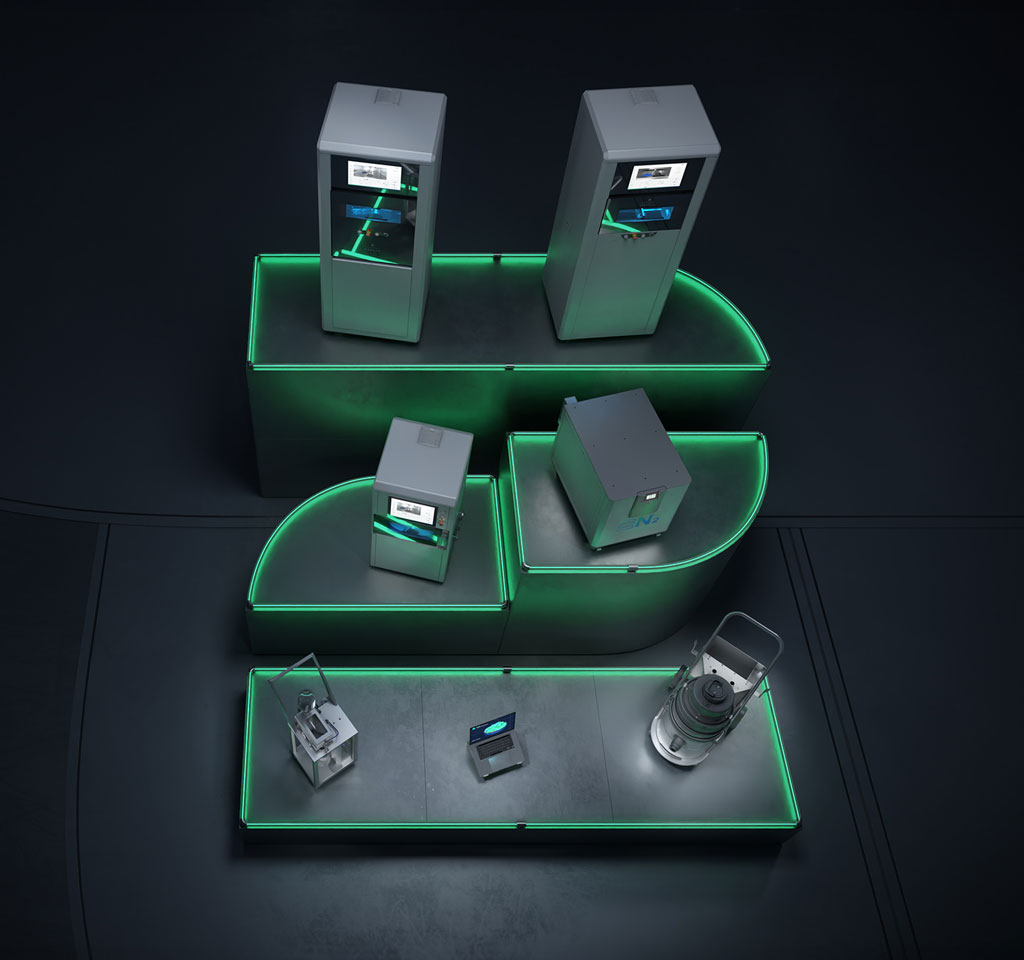
Explore the Complete 2onelab Ecosystem
High-performance metal 3D printers, intelligent software, and essential equipment combineed to deliver a seamless, efficient workflow.
FAQ – 3D Printing & Metal Powder
What Is Powdered Metal?
Metal powder consists of fine metal particles used in various manufacturing processes, including 3D printing, powder metallurgy, and thermal spraying or coating.
What Are the Main Benefits of 3D Printing Metal Powder?
High-quality 3D printing metal powder ensures precise layer formation, smooth surface finish, fewer defects, and reliable part performance. It also allows safe recycling with systems like 2Clean and 2Sieve.
Why Is Powder Quality Important for 3D Printing?
The quality of metal powder directly affects printed part accuracy, surface quality, and mechanical strength. Clean, consistent powder reduces errors and produces durable, reliable components.
What Properties Should Metal Powder Have for LPBF?
Key properties include fine particle size (15–45 µm), spherical shape, high flowability, high purity, and good packing density.
Can Metal Powder for 3D Printing Be Recycled?
What Is the Difference Between 2Clean and 2Sieve?
Can Reactive Powders Like Titanium Be Sieved Safely?
Yes. 2Sieve operates under protective gas (e.g., argon), making it suitable for reactive metal powders like titanium.
What Are the Advantages of Metal Powder Recycling in 3D Printing?
Metal powder recycling reduces material costs, ensures consistent powder quality, minimizes waste and defects, and supports more sustainable production.
Further links:
- The influence of material and process parameters on powder spreading in additive manufacturing
- The Influence of Particle Shape, Powder Flowability, and Powder Layer Density on Part Density in Laser Powder Bed Fusion
- An investigation of the effect of powder flowability on the powder spreading in additive manufacturing
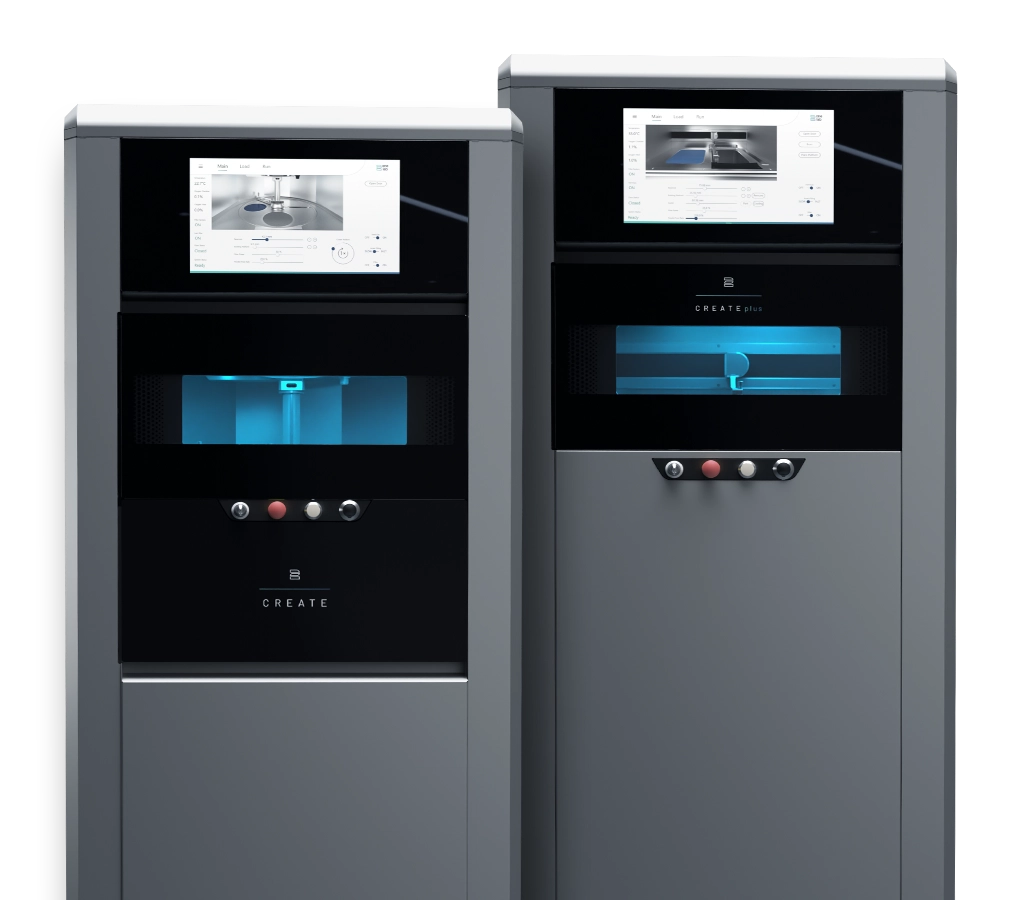
Metal for 3D Printing – 2Create & 2Create Plus
Metal for 3D printing used in powder bed fusion: Learn about steel, titanium, cobalt-chrome, Inconel and aluminium.