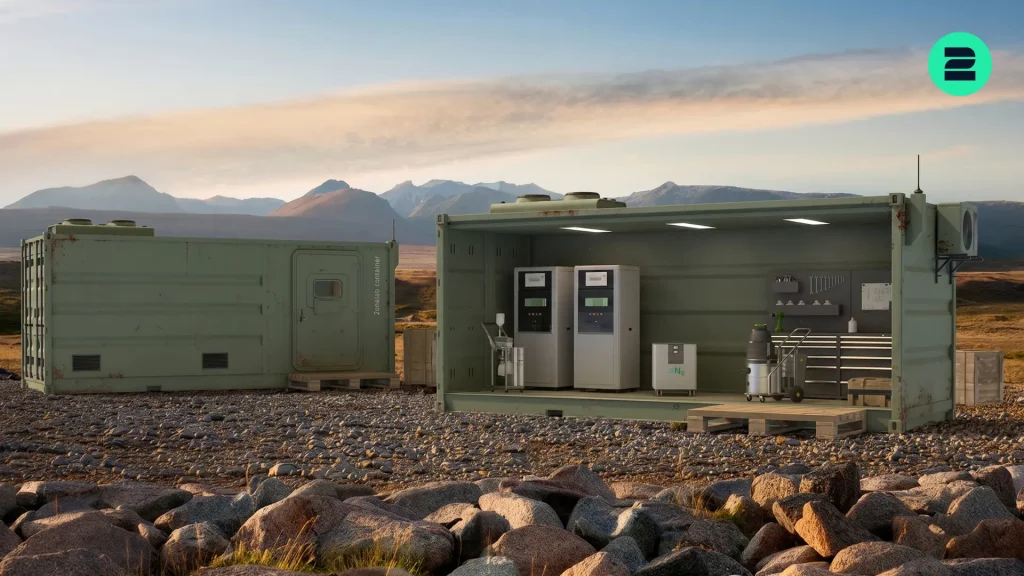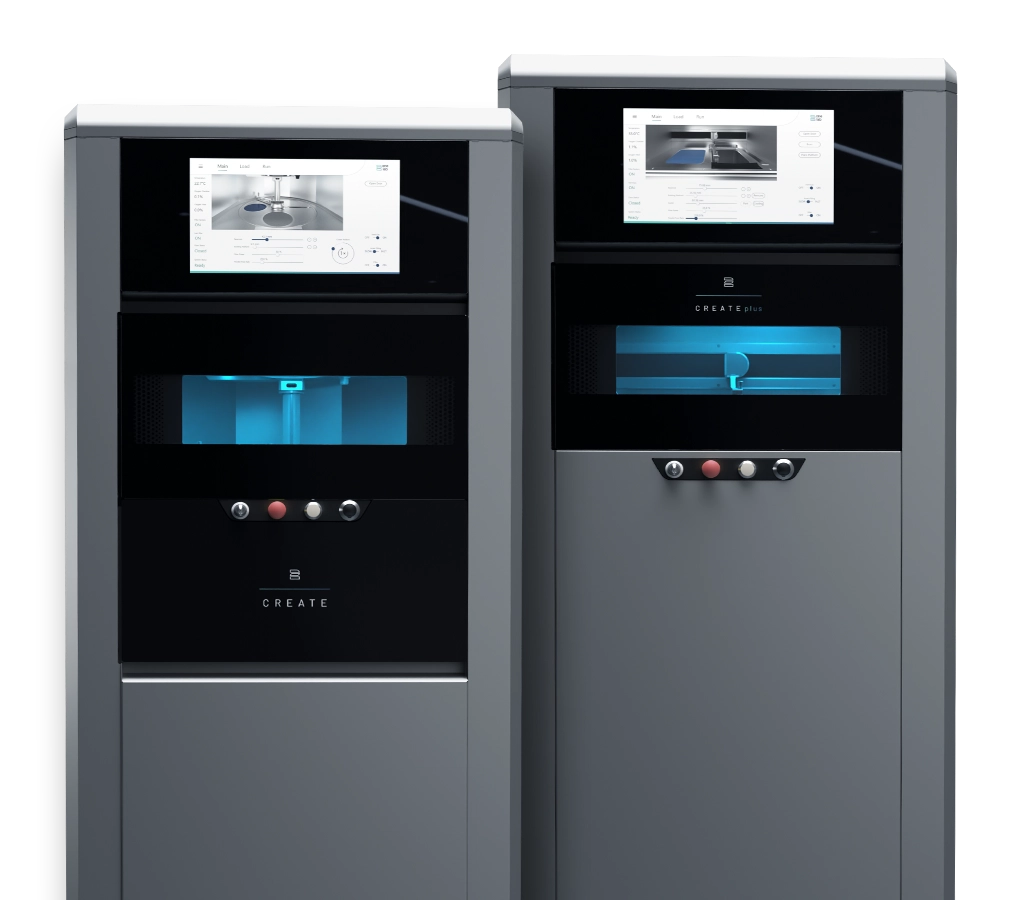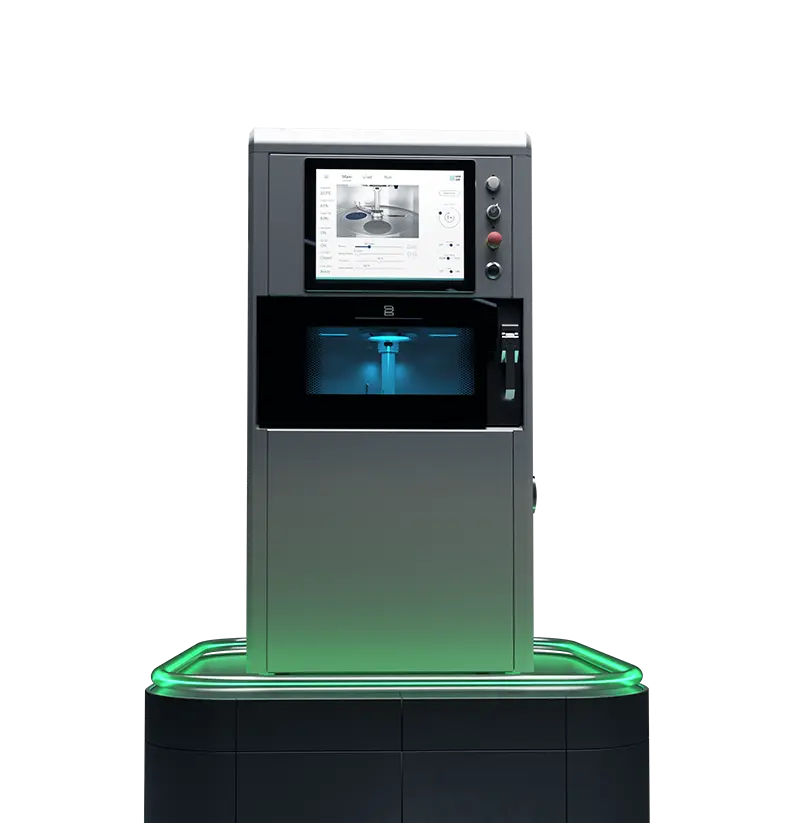

Discover how the 2Create Desktop metal 3D printer helps dental laboratories increase efficiency, optimize build cycles, and produce a wide range of dental applications in-house.
Key Points in Brief:
- Capacity varies by case, not just machine: Size, height, geometry, support requirements, material, and nesting layout all determine how many units fit on a single build platform.
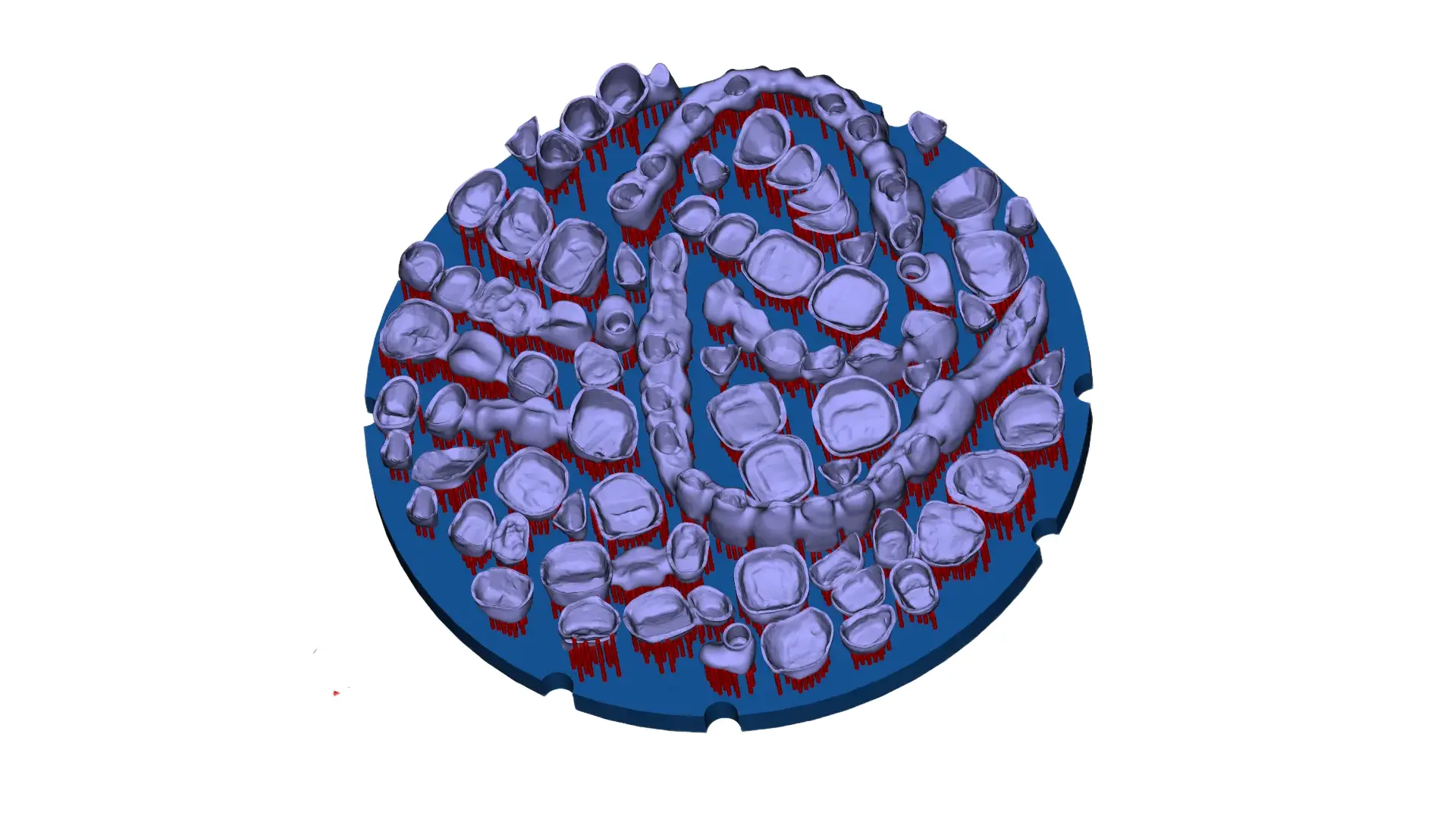
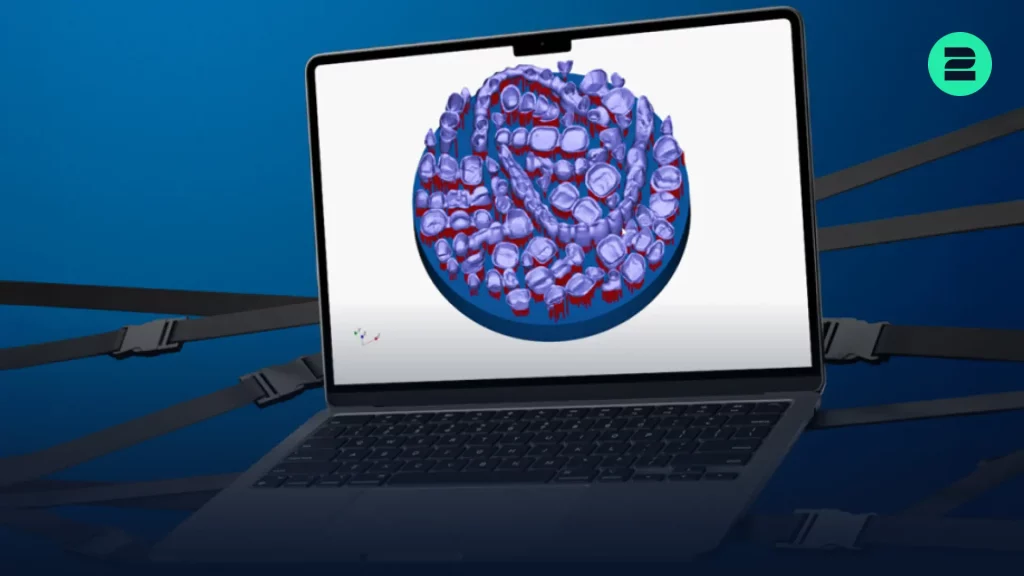
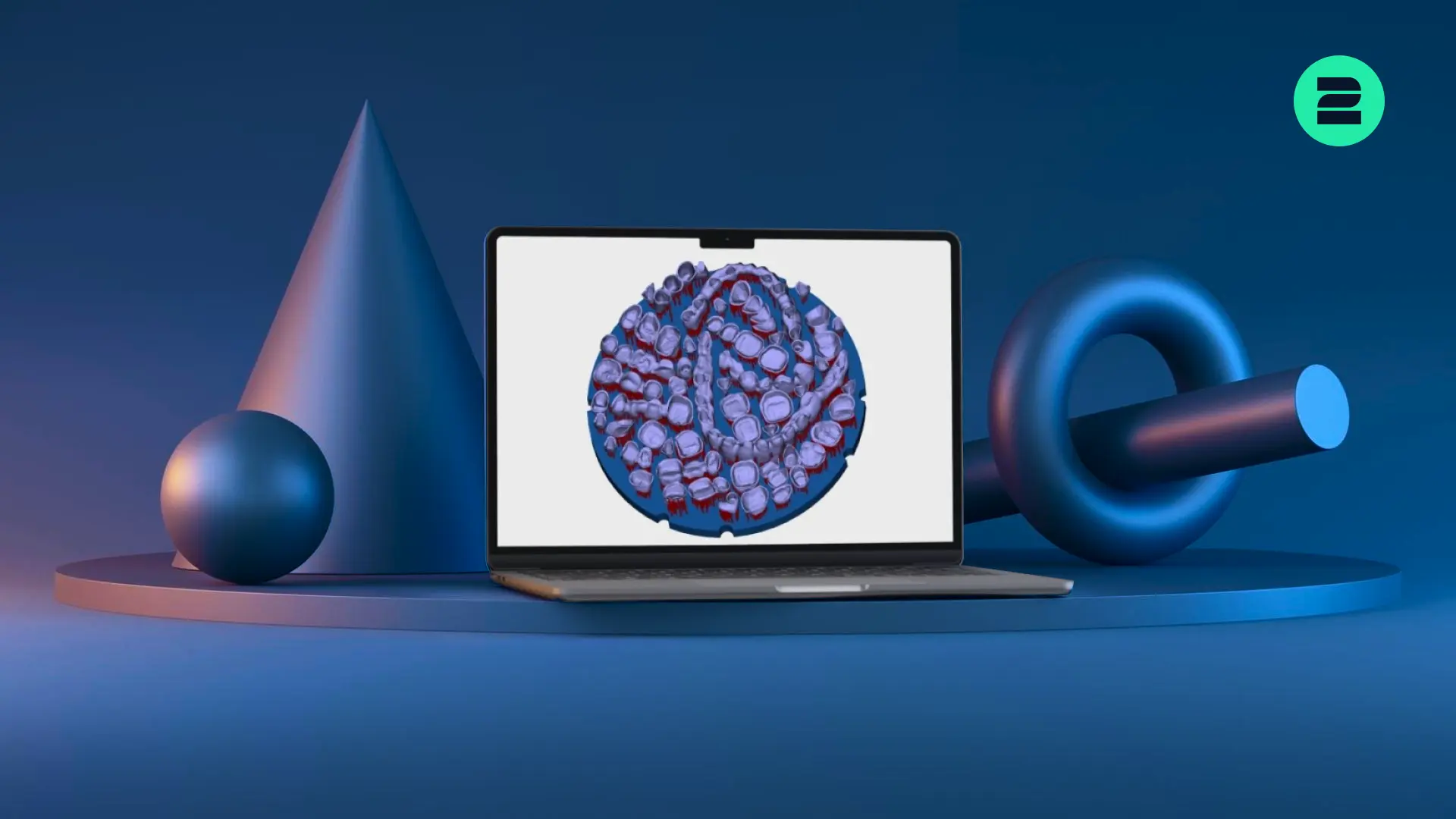
- Mixed plates boost efficiency: The automatic 3D nesting capabilities of 2Build CAM software help laboratories maximize platform utilization, reduce print cycles, and lower cost per unit.
Optimizing Dental Metal 3D Printing In-House
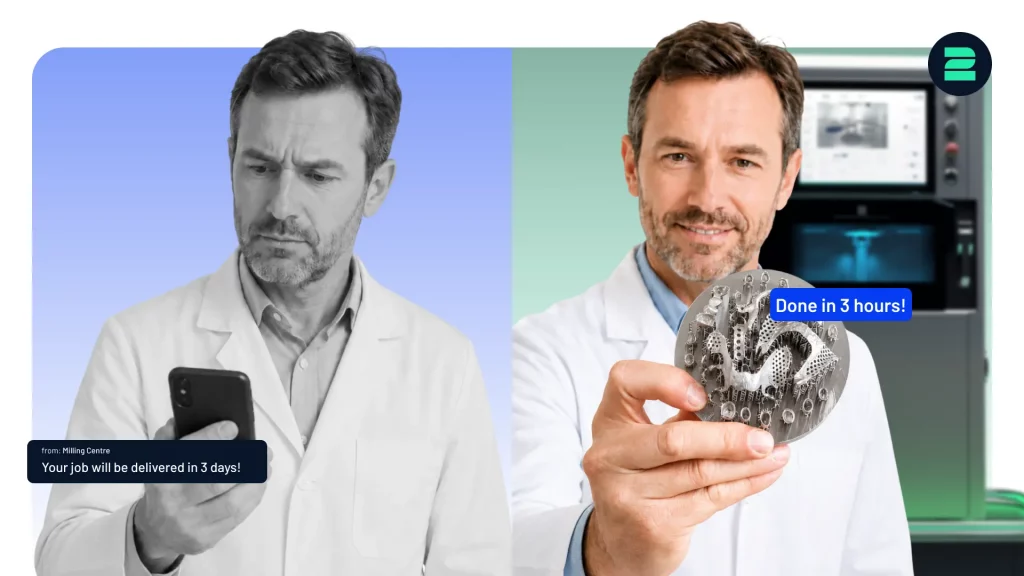
Fast turnaround is essential in the dental industry. Laboratories must handle increasing case volumes while maintaining accuracy, fit, and repeatability.
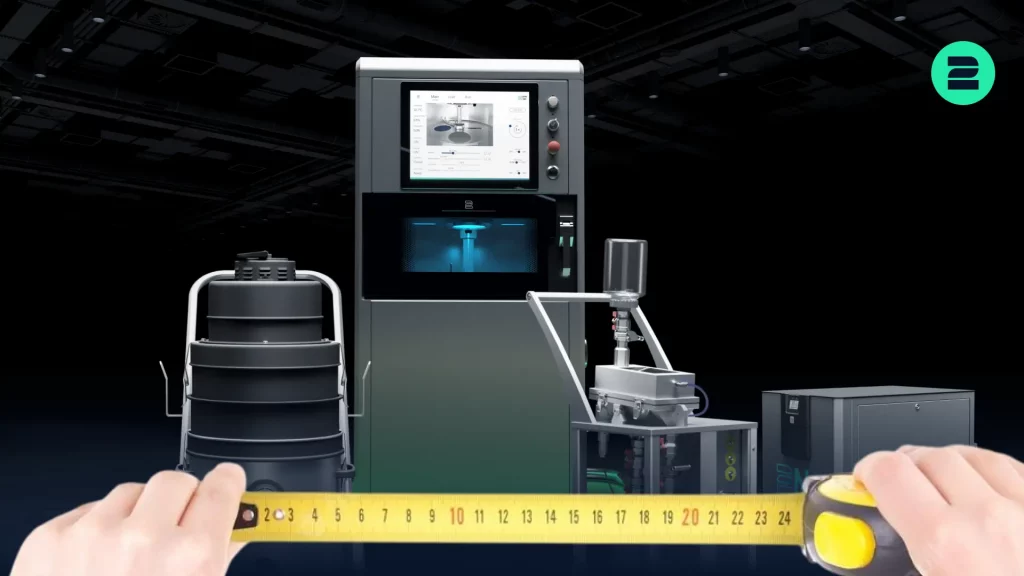
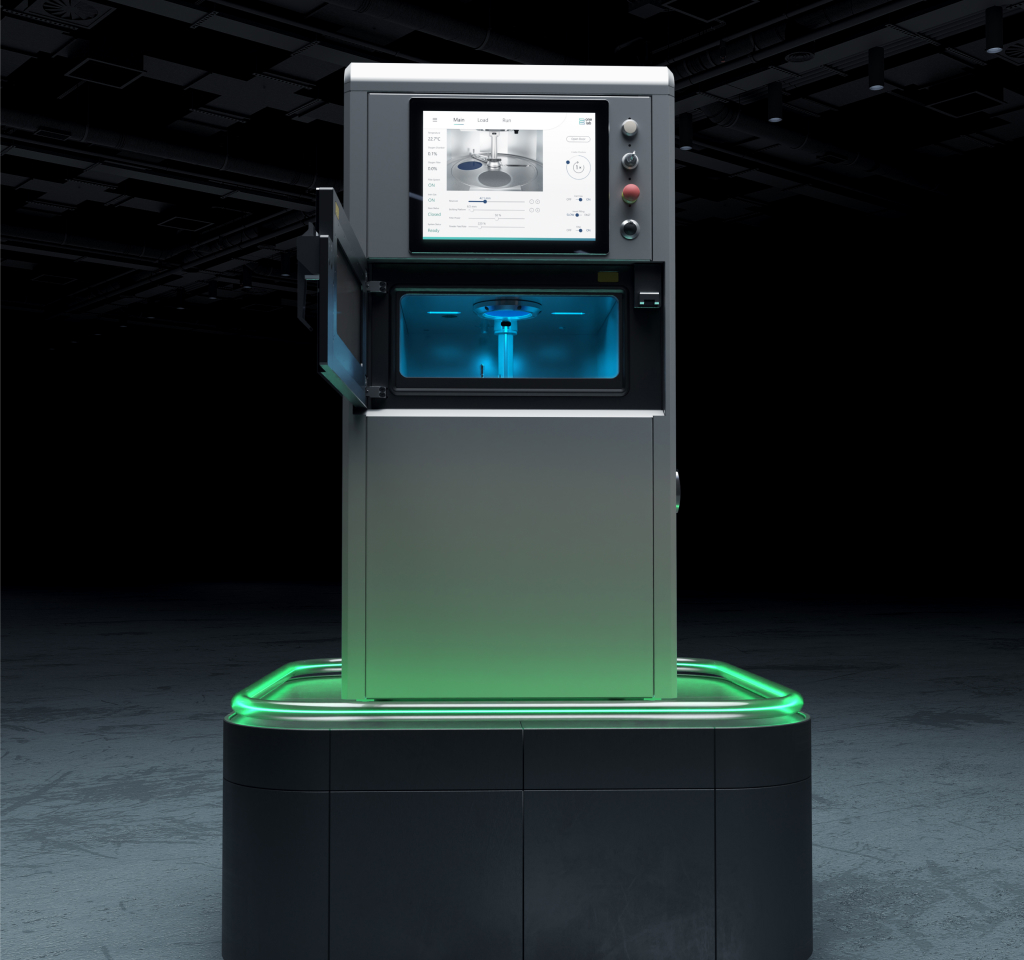
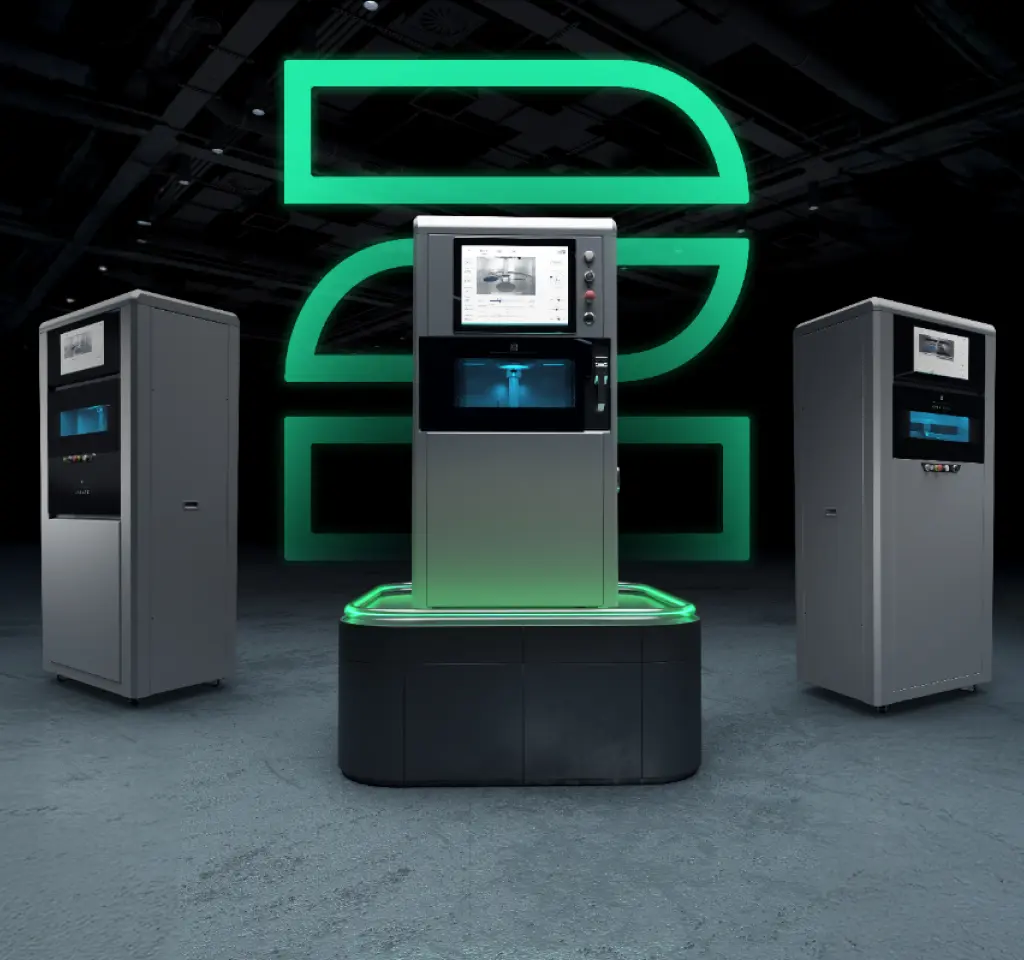
With the 2Create Desktop, a compact tabletop metal 3D printer, dental labs can bring professional-grade metal production directly into their in-house workflow.
The system offers a 100 × 80 mm build volume and a 300 W laser, a combination designed to support the fast, reliable production of a wide range of dental applications — from single crowns to complex mixed-case platforms.
What Determines Dental Application Capacity Per Build?
How many units can actually be printed in a single build?
The answer depends on several factors:
- Size and height of each unit;
- Geometry and wall thickness;
- Support strategy required for overhangs & margins;
- Nesting layout and platform utilization.
Build Capacity & Mixed Plate Efficiency
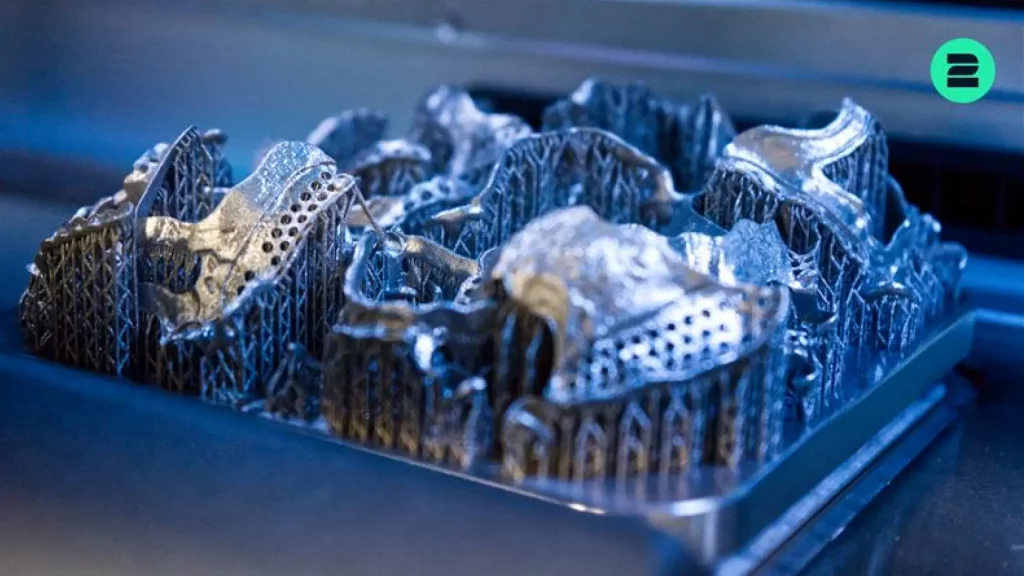
A build platform filled with single crowns will accommodate a very different number of units compared with one loaded with RPD frameworks, full-arch substructures, or orthodontic appliances.
Mixed plates — combining multiple application types on a single platform — are also possible, representing a major efficiency advantage of in-house metal printing.
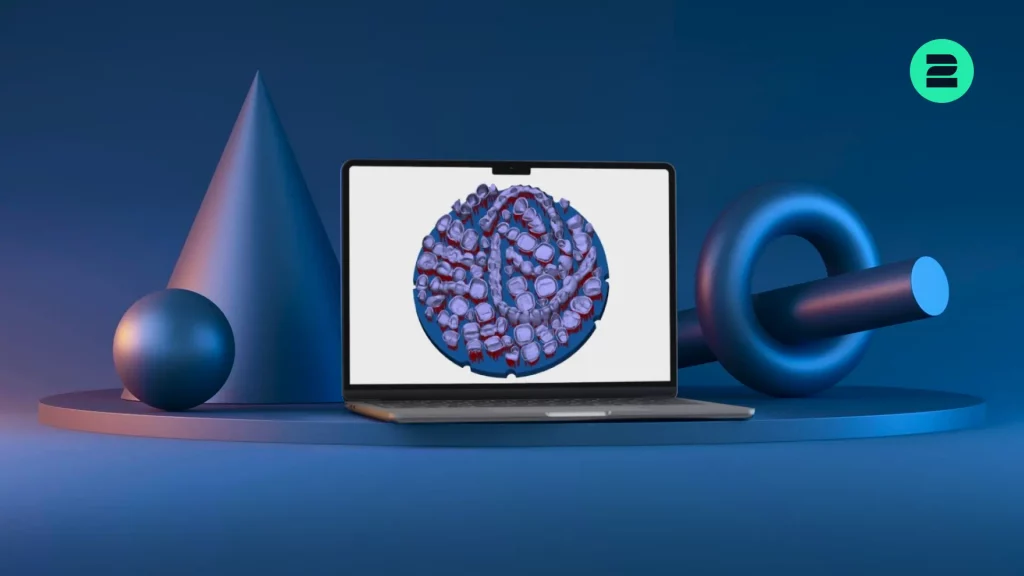
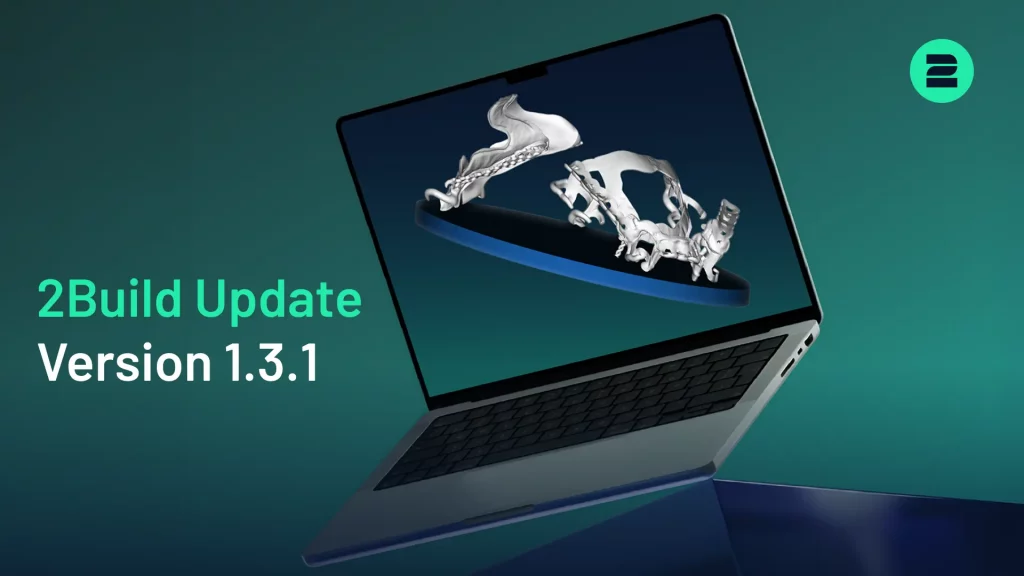
With the 2Build CAM software, automatic 3D nesting, support generation, and slicing help laboratories optimize each build without manual layout calculations.
You are currently viewing a placeholder content from Default. To access the actual content, click the button below. Please note that doing so will share data with third-party providers.
More InformationMetal Dental Applications Produced with 2Create Desktop
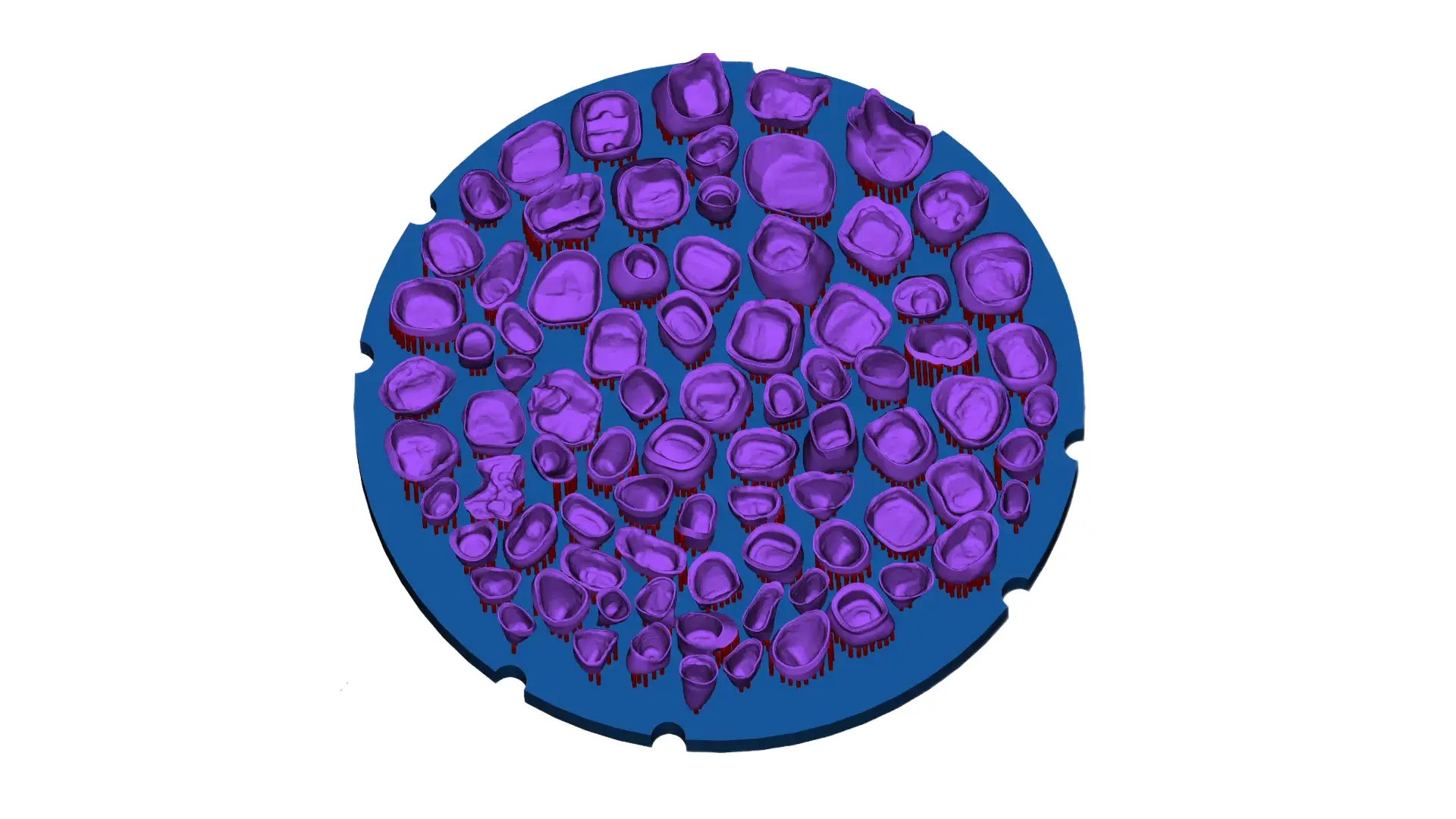
Dental Crowns -
82 units per build
A dental crown is a full-coverage restoration that caps a prepared tooth to restore its shape, strength, and function.
Crowns are typically low-height, compact units, making them one of the most space-efficient applications to nest.
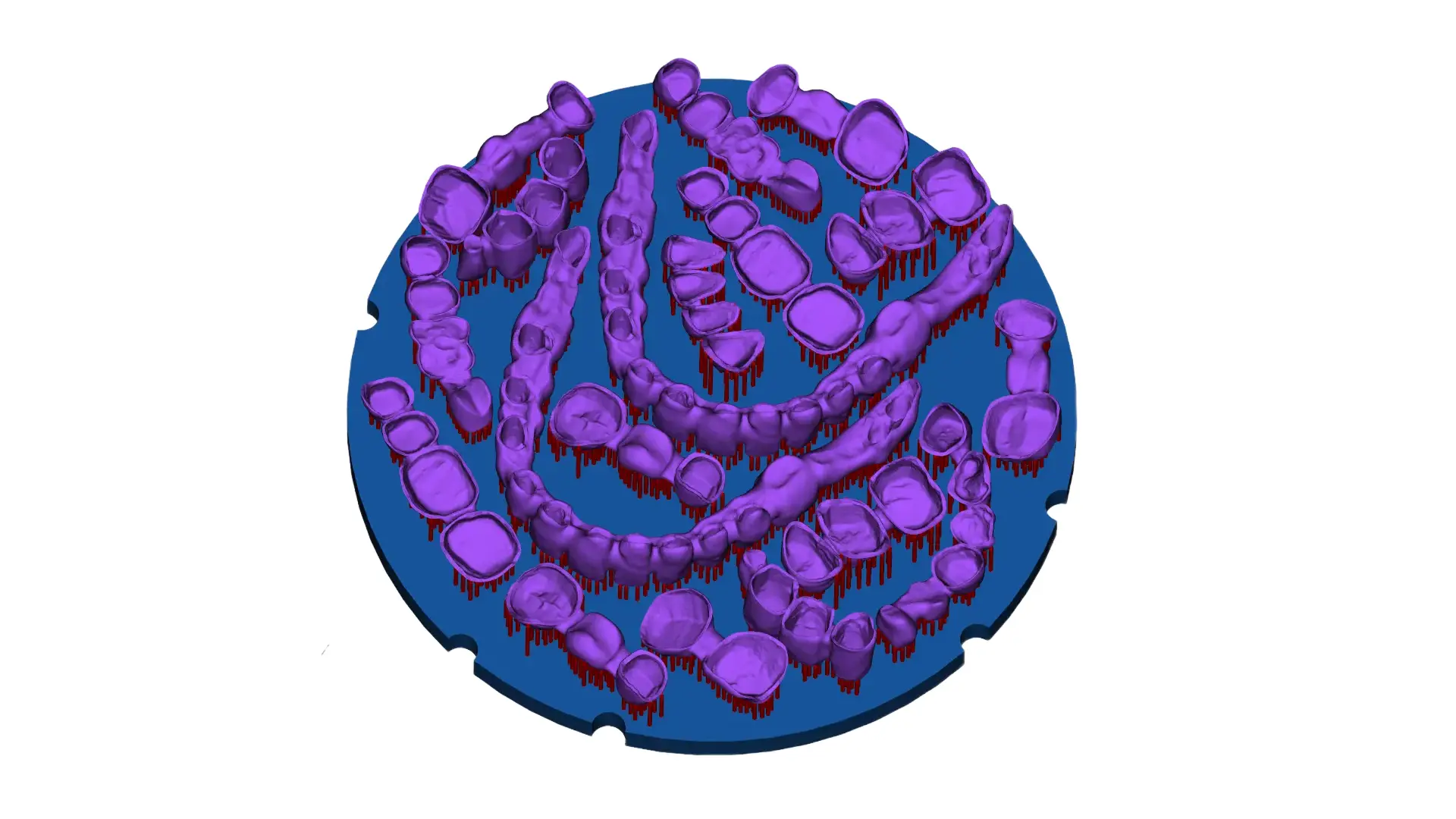
Dental Bridges -
18 units per build
A bridge replaces missing teeth by anchoring a restoration to adjacent teeth or implants. Compared with single crowns, bridges have a larger, more irregular footprint, affecting nesting density.
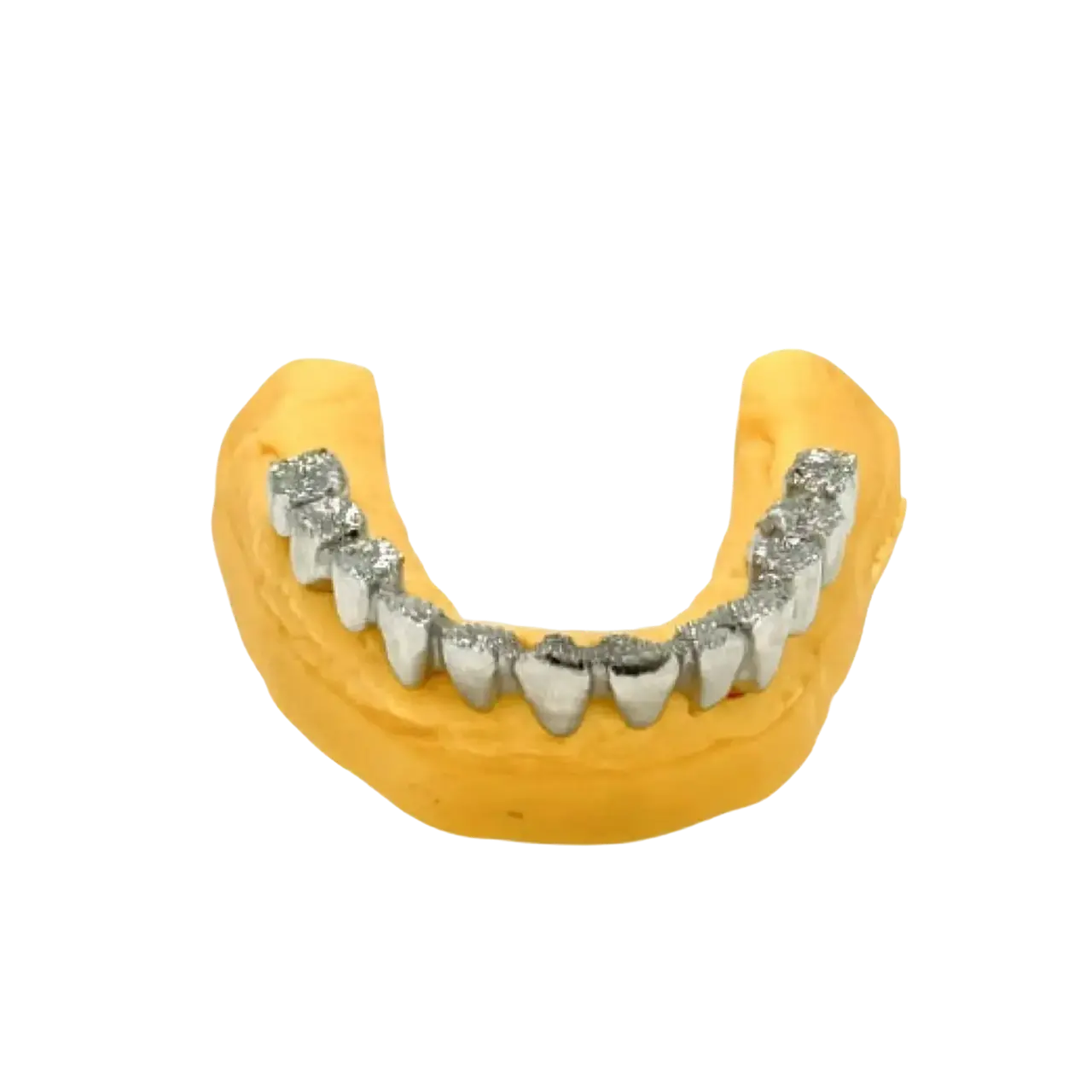
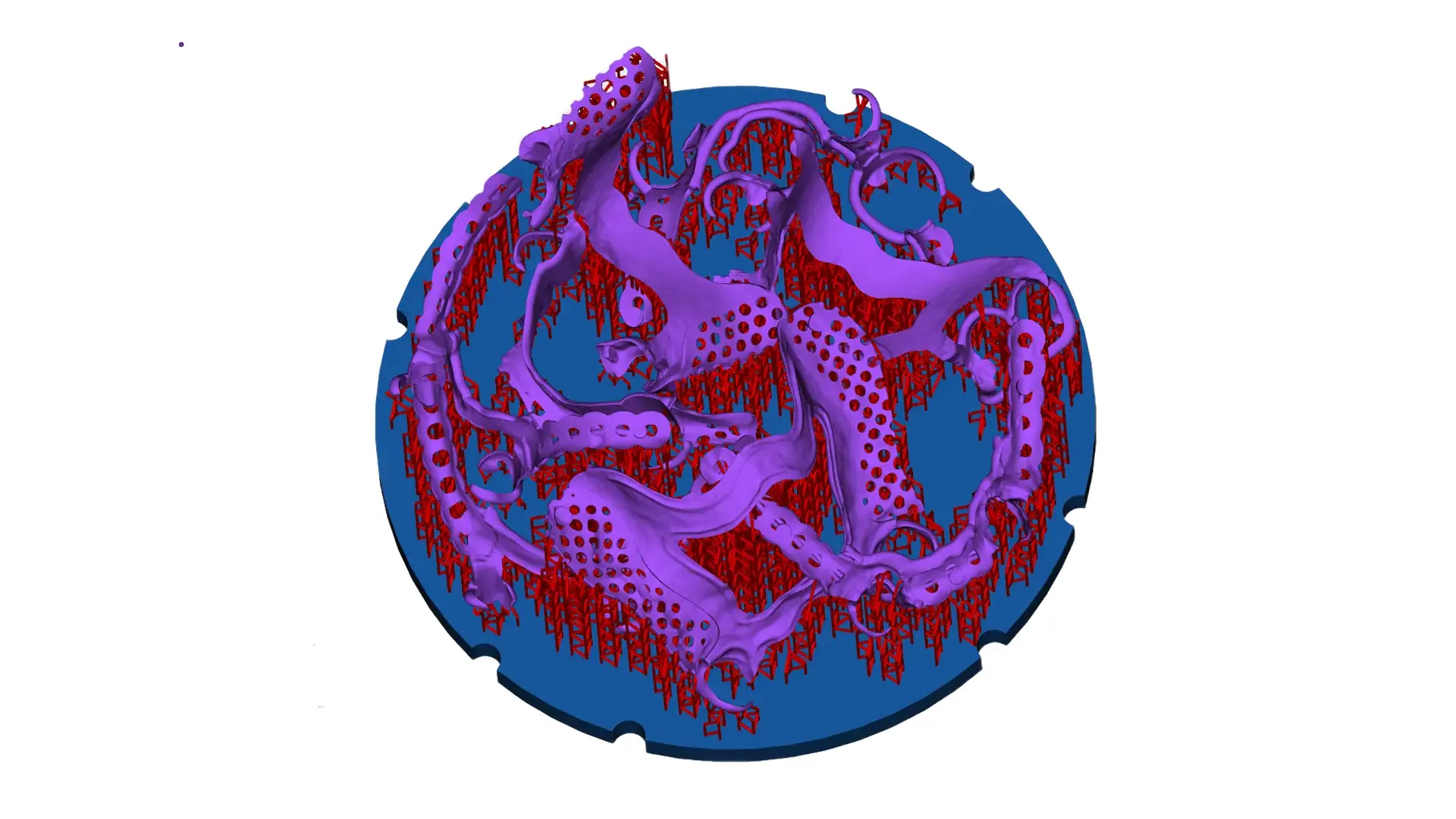
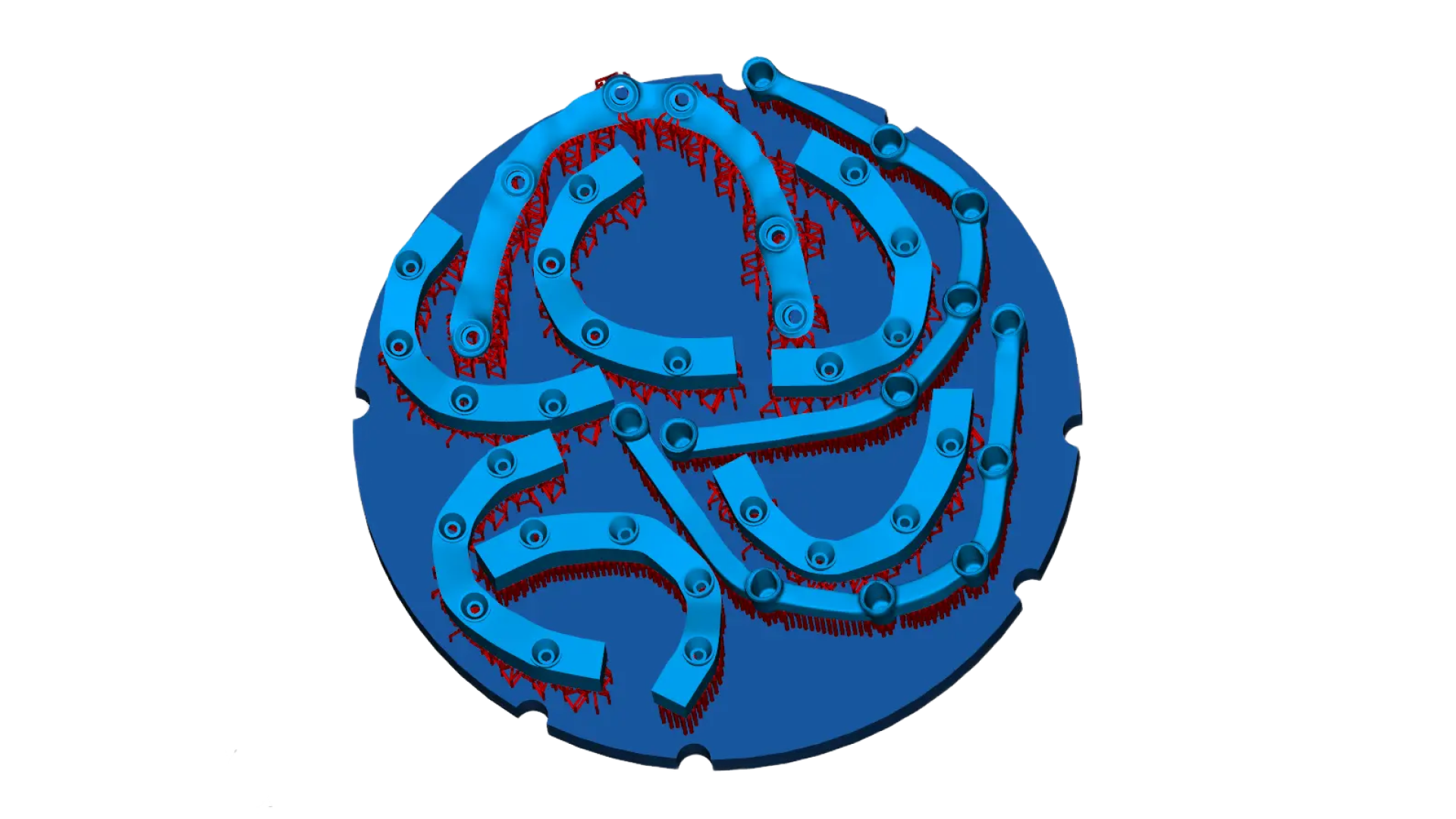
RPD`s (Removable Partial Denture Frameworks) -
8 units per build
An RPD framework is the metal substructure of a removable partial denture. Its larger, more complex geometry typically allows fewer units per build, but automatic 3D nesting enables efficient platform utilization.
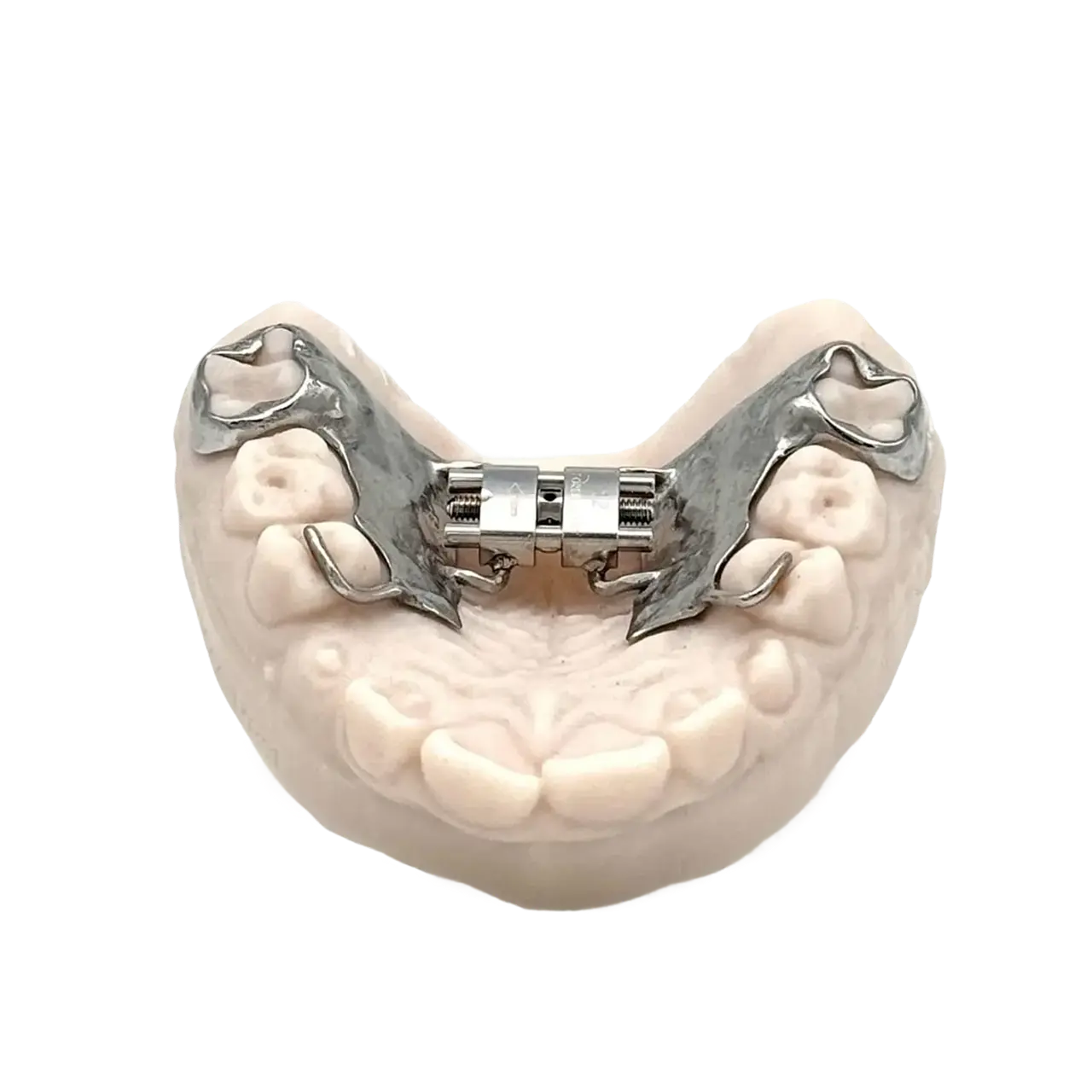
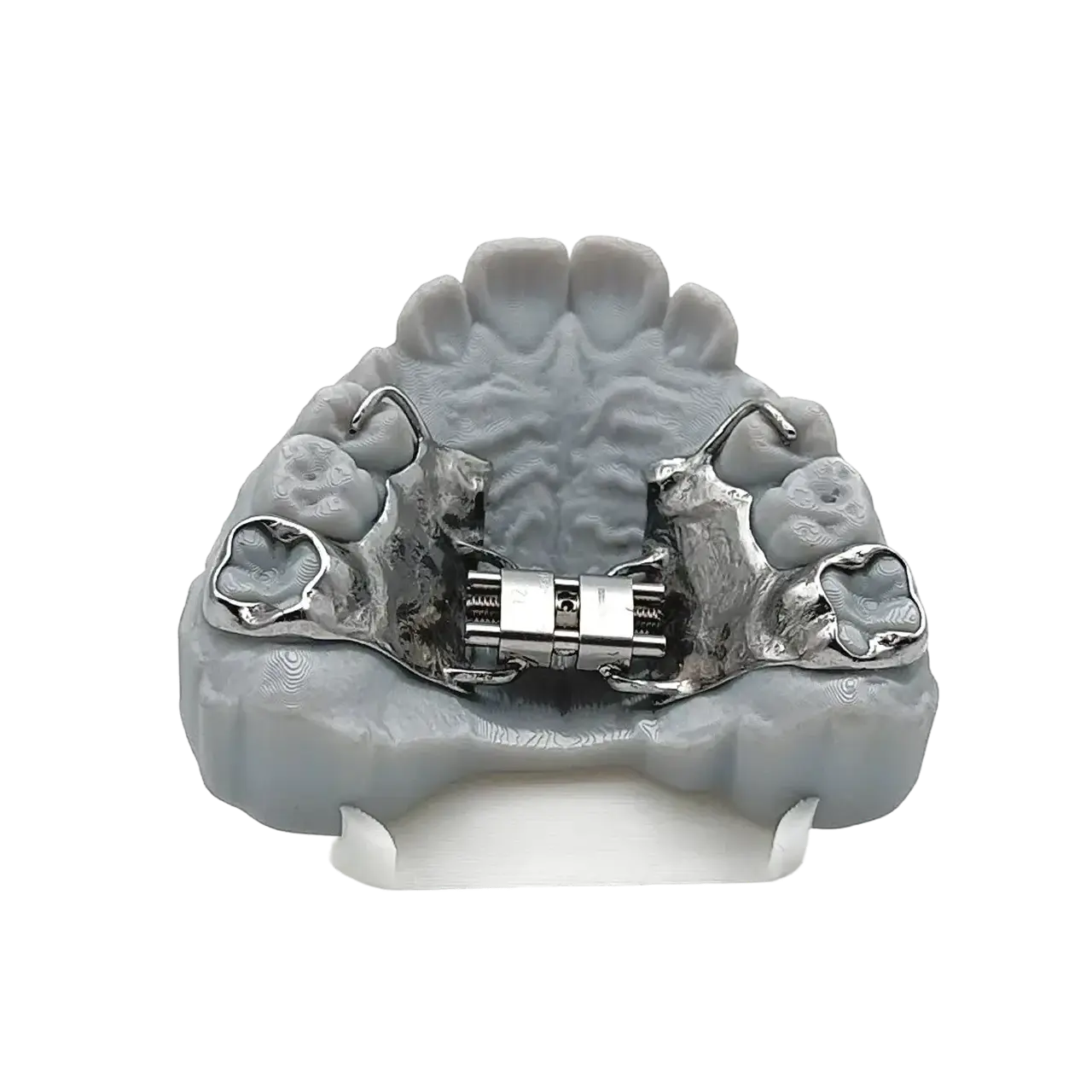
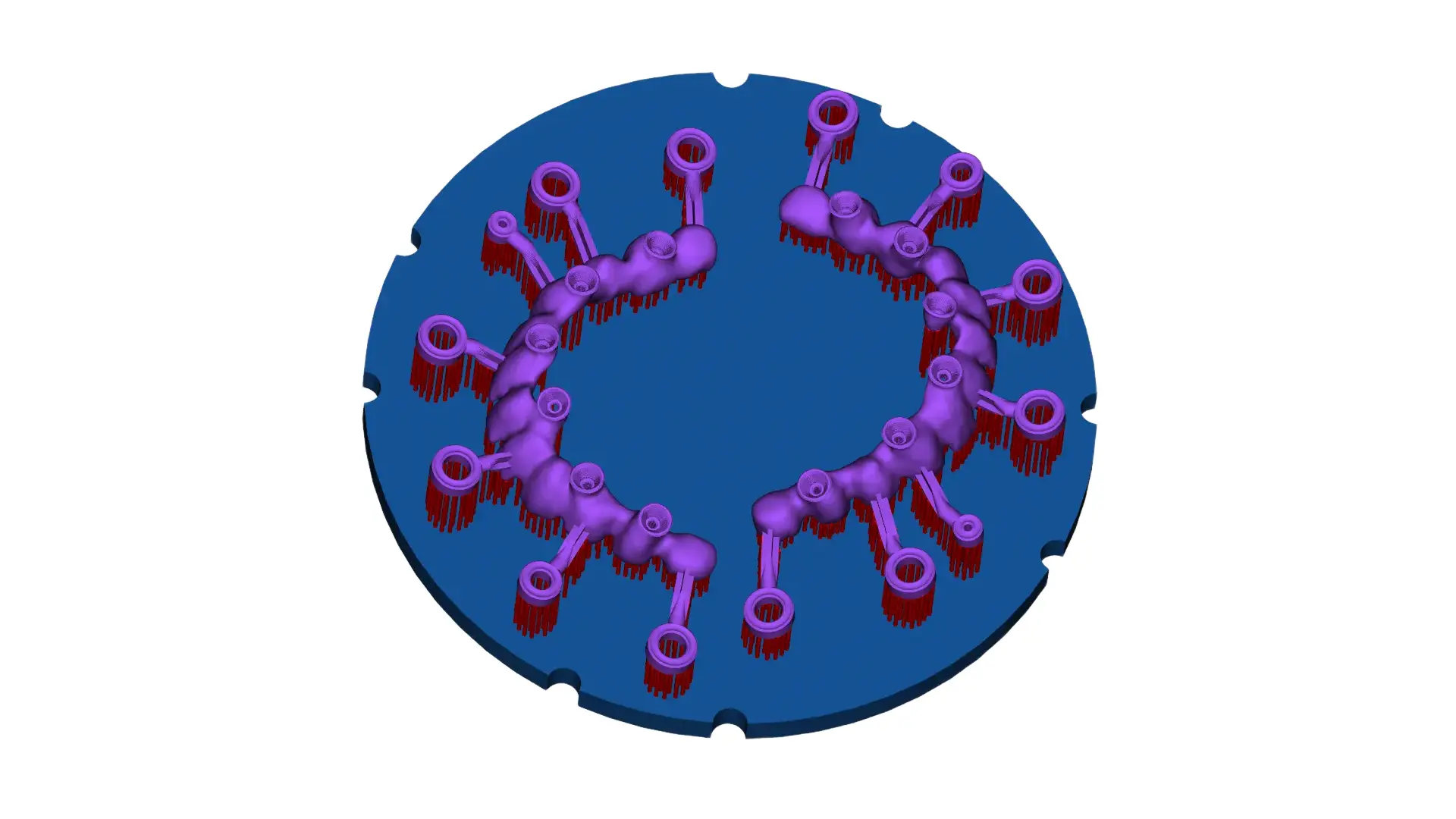
RPE`s (Rapid Palatal Expander) -
9 units per build
An RPE is an orthodontic dental application used to widen the upper jaw through controlled expansion forces. Its compact but delicate geometry requires careful support planning during production.
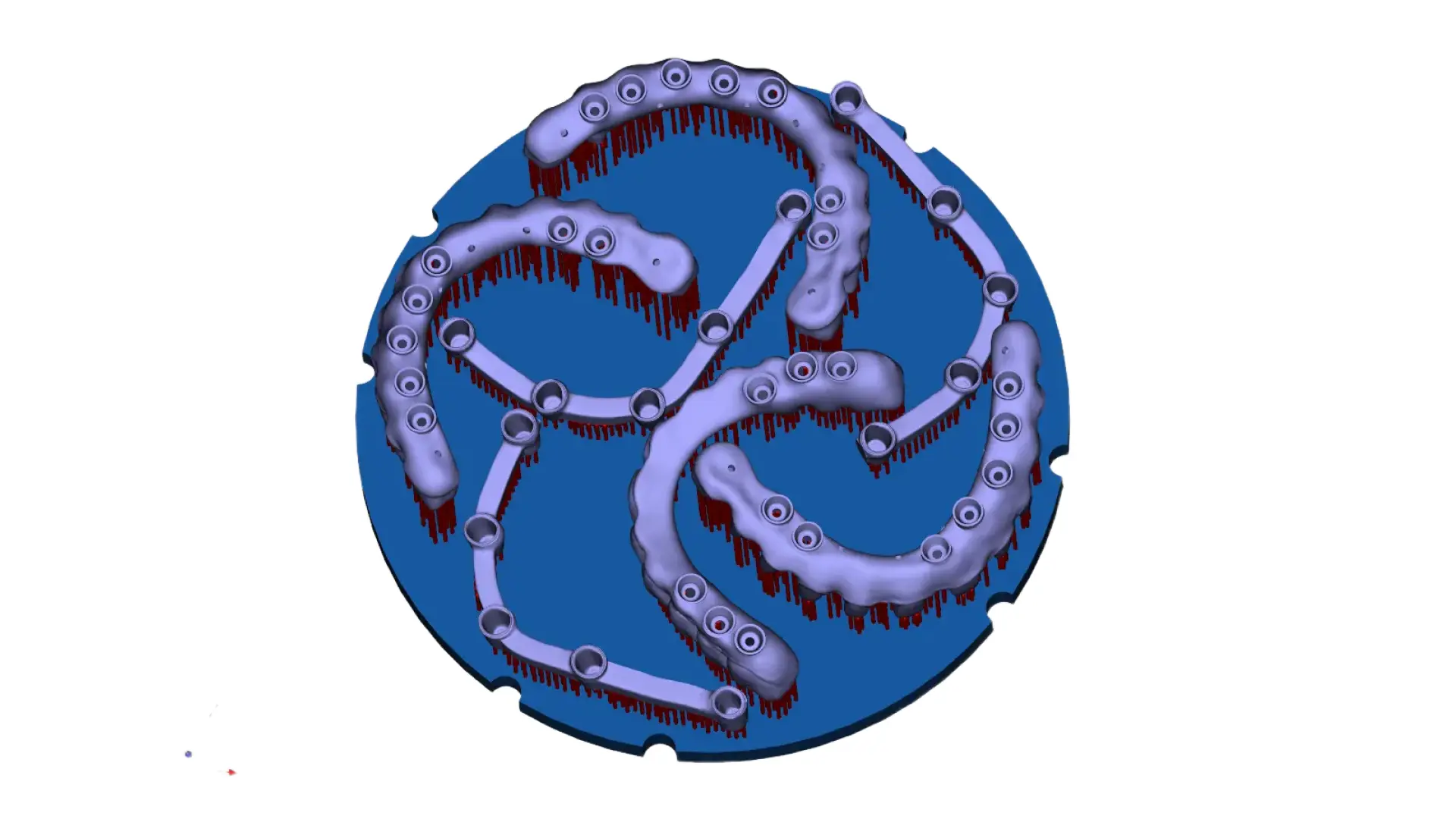
Full Arch Restorations -
7 units per build
A full-arch restoration or substructure spans an entire dental arch and supports a complete set of prosthetic teeth. Due to their large size and extended footprint, full arches require more platform space and allow fewer units per build.
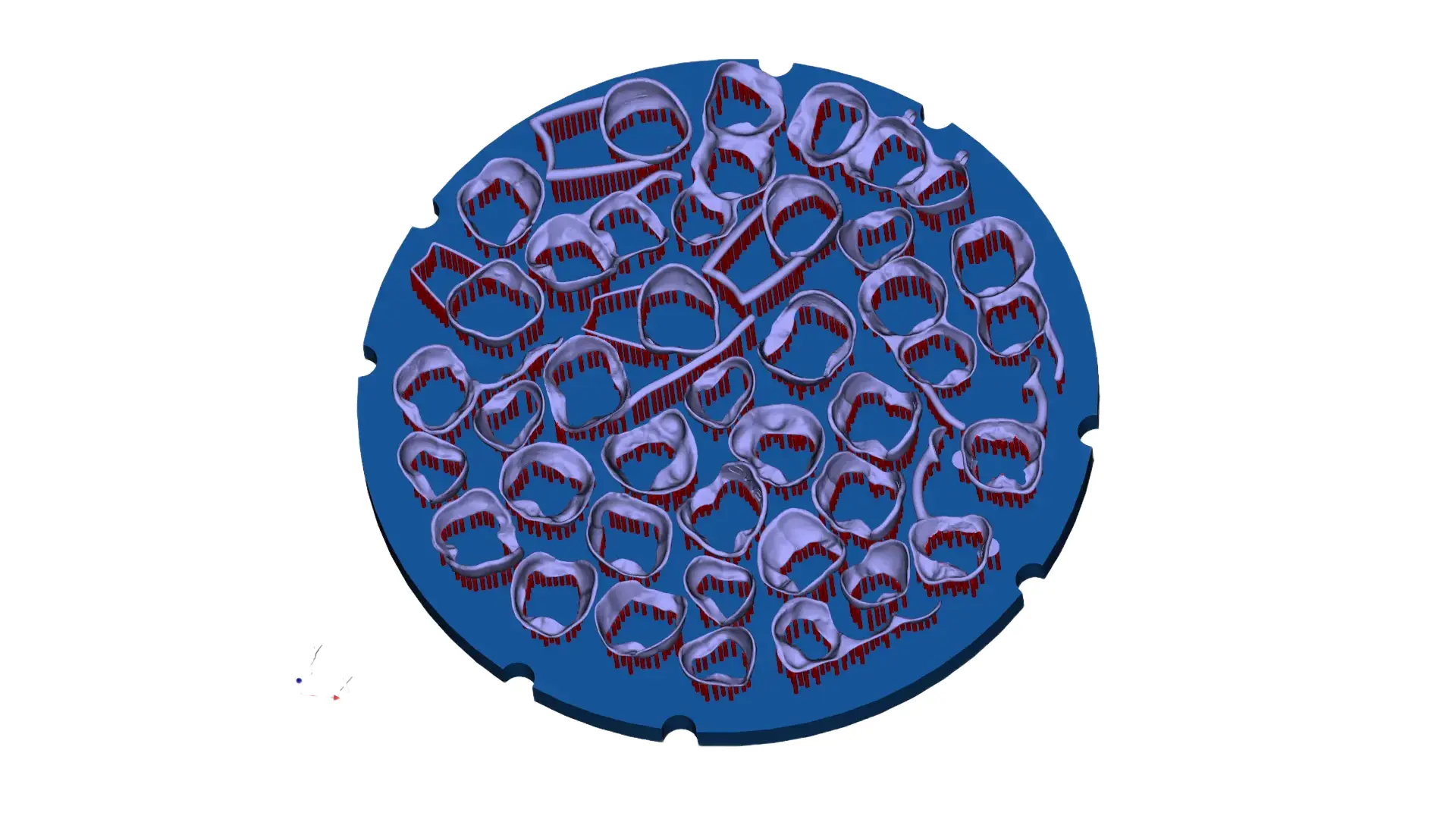
Orthobands -
34 units per build
Orthobands are metal bands used as anchors for orthodontic appliances. Their small, ring-like geometry makes them highly efficient to nest in high volumes on a single platform.
Hybrid Restorations -
2 units per build
Hybrid restorations combine a metal substructure with a full arch of prosthetic teeth. Due to their large size and structural complexity, they require careful support planning and allow fewer units per build.
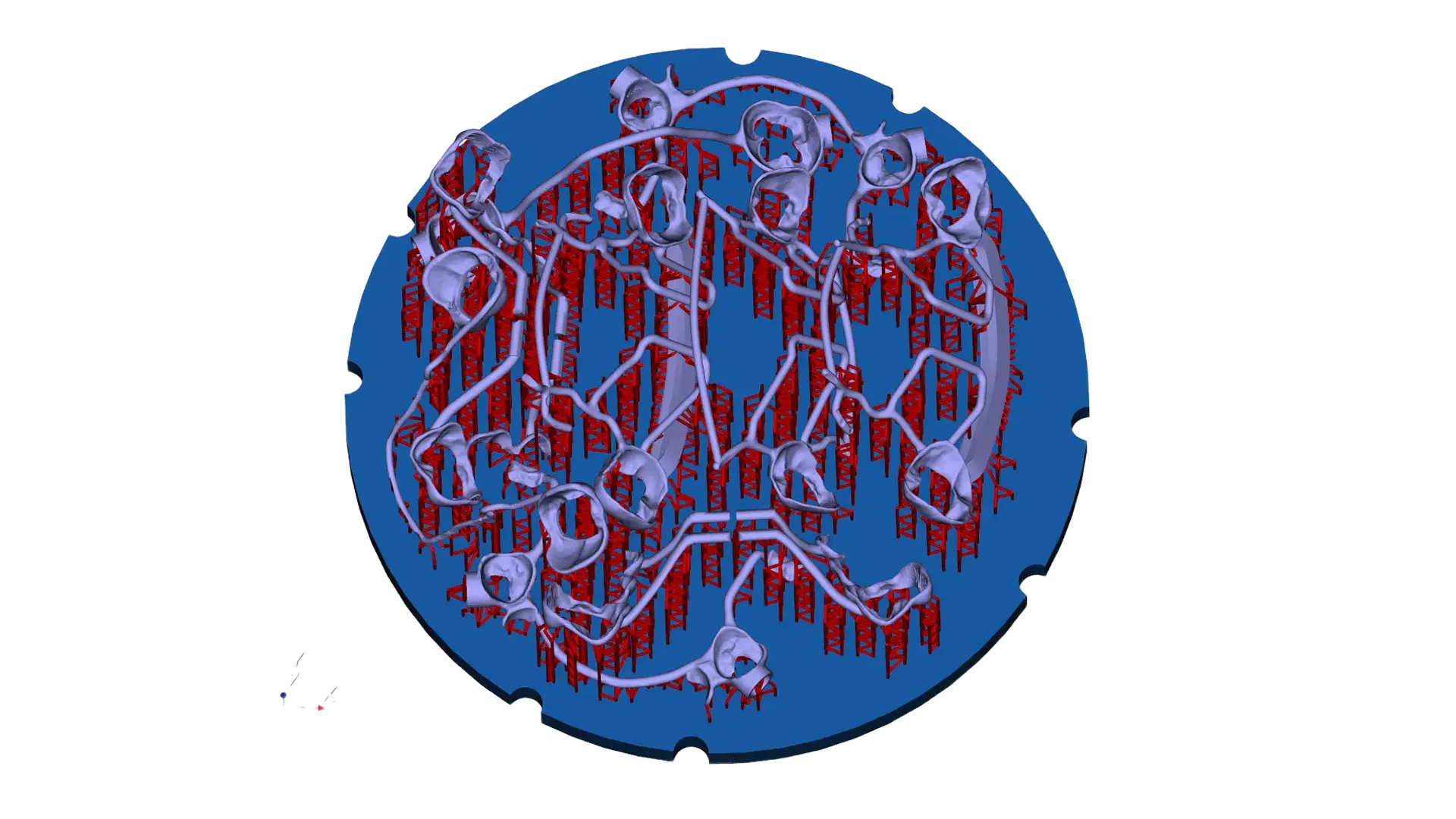
NPM (Non-Precious Metal Frameworks) -
9 units per build
NPM frameworks are substructures made from non-precious metal alloys such as cobalt-chrome. As they cover a range of applications and sizes, achievable quantities per build vary depending on the specific case.
Conclusion - Increasing Flexibility with In-House Metal Production
Printing multiple applications at once helps laboratories make better use of every build cycle. Instead of waiting to collect only one type of case, laboratories can plan mixed production based on urgency, material requirements, and platform efficiency. This flexibility allows them to expand their portfolio of dental applications and handle a wider range of cases.
The combination of the 2Create Desktop and 2Build CAM software provides this flexibility. With a compact tabletop design, automated nesting, dental-focused CAM preparation, and efficient platform utilization, the solution enables practical, high-volume metal production while maintaining quality, accuracy, and control.
Efficient Metal Dental 3D Printers
The 2Create series – including 2Create/2Create Plus and 2Create Desktop — offers advanced metal 3D printing solutions tailored to a wide range of dental applications.
FAQ – Metal Dental Applications & Build Capacity with the 2Create Desktop
How Many Dental Applications Can Be Printed with the 2Create Desktop?
The number depends on the size, geometry, support requirements, and nesting layout of each application. Smaller applications allow higher quantities, while larger restorations require more build space.
What Determines the Number of Dental Applications per Build?
Build capacity depends on part size, height, geometry, support strategy, and platform utilization. Automatic nesting helps maximize available build space.
Can Different Dental Applications Be Printed in the Same Build?
Yes. Mixed plates allow laboratories to combine multiple dental applications in one build, improving platform utilization and reducing print cycles.
What Metal Dental Applications Can Be Produced with the 2Create Desktop?
The 2Create Desktop supports a wide range of metal dental applications, including crowns, bridges, RPD frameworks, RPE appliances, full arch restorations, orthobands, hybrid restorations, and NPM frameworks.
How Does 2Build CAM Optimize Metal 3D Printing?
2Build CAM provides automatic 3D nesting, support generation, and slicing to help laboratories prepare and optimize each build.
Further links:
- Emerging Metal Additive Manufacturing for Individualized Dental Therapies: A Narrative Review
- Challenges of Co–Cr Alloy Additive Manufacturing Methods in Dentistry—The Current State of Knowledge (Systematic Review)
- Principles, Current Applications, and Future Perspectives of Selective Laser Melting in Prosthodontics: A Review