This blog post explores why titanium remains one of the most trusted materials in modern medicine, how additive manufacturing enhances the potential of implants, and what the future holds for Ti implants in healthcare.
Table of Contents
Key Points in Brief:
- Titanium implants: biocompatible, lightweight, durable — for bones, joints, teeth, and spine.
- 3D printing enables patient-specific, anatomically matched implants.
- Benefits: precise fit, faster surgery, improved osseointegration, and less material waste.
- Looking ahead: advanced alloys and personalized implants are shaping modern medicine.
What Are Titanium Implants?
Titanium implants are medical devices made from titanium or its alloys, designed to replace, support, or enhance biological structures. They are used for:
- Orthopedic implants: hips, knees, spine;
- Dental implants: titanium teeth/abutments;
- Cranial and maxillofacial reconstruction: patient-specific jaw or facial implants.
Titanium’s natural integration with bone (osseointegration) and soft tissue, combined with its lightweight durability, makes it one of the most reliable materials for long-term implantation. 3D printing allows anatomically precise, patient-specific designs directly from imaging data.
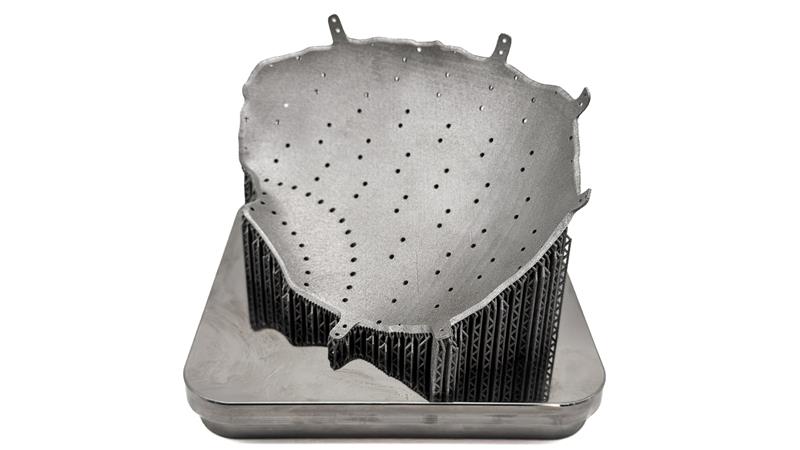


Cranial implant (left), titanium joint implant (middle) and jaw implant (right) printed with 2Create & 2Create Plus
Where Titanium Implants Are Used in Healthcare
Titanium implants are used across nearly every major area of surgical disciplines:
- Craniofacial and neurosurgery: Cranial plates, meshes, and patient-specific reconstruction implants;
- Dentistry: Implant screws, abutments, and prosthetic components;
- Orthopedics: Joint replacements, fracture fixation devices, spinal hardware;
- Maxillofacial surgery: Custom jaw and facial implants.
3D printing enhances these applications by providing accurate anatomical models for pre-surgical planning, procedure rehearsal, and precise implant sizing — reducing surgery time and postoperative complications.

Why Titanium Is a Preferred Material
- Biocompatibility: integrates with human tissue and rarely causes rejection;
- Mechanical strength: strong yet lightweight;
- Corrosion resistance: stable oxide layer ensures long-term durability;
- Customizable alloys: niobium, zirconium, aluminum, or vanadium adjust elasticity, strength, and surface performance.
Key Advantages of Additive Manufacturing for Titanium Implants
3D printing has transformed titanium implant production by enabling complex geometries, efficient workflows, and highly personalized medical solutions. Advanced metal 3D printers create lightweight, durable implants with precise porous structures and patient-specific shapes that were previously impossible to manufacture.
In certified facilities, implants can even be produced in-house, shortening production times and improving surgical accuracy.
-

- Knee and Hip Implant
Benefits for Patients and Manufacturers
- Patient-specific design: AM allows implants to be created directly from medical imaging data, ensuring an exact anatomical fit for routine and complex clinical cases.
- Advanced structural control: Engineers can design porous and lattice structures that enhance osseointegration, optimize load distribution, and reduce stress shielding.
- Greater design freedom: Complex shapes, internal channels, and lightweight frameworks can be manufactured without additional tools, expanding what is possible in implant design.
- Improved surgical outcomes: Better implant fit supports more efficient surgical planning, shorter operations, and a lower risk of complications.
- Efficient production workflows: AM reduces lead times and eliminates tooling, enabling faster manufacturing of custom implants at competitive costs.
- Material and environmental efficiency: Layer-by-layer fabrication minimizes waste compared with subtractive methods, supporting more sustainable production.
In addition to hearing aids, experimental titanium components are being tested, such as cochlear implant housings or parts for infusion pumps. They are lightweight, durable, and customizable, but not yet standardized.
Future Outlook for Titanium Implants
The future of titanium implant technology is shaped by the development of advanced alloys such as shape-memory Ti–Ni and optimized Ti–Nb, which offer greater flexibility, strength, and long-term reliability. At the same time, improved post-processing methods will enhance antibacterial properties and mechanical stability.
As personalized implants become more widespread, updated regulatory frameworks and unified quality-control standards will be increasingly important. Ongoing cooperation between surgeons, engineers, materials scientists, and software developers will continue to drive meaningful progress in the field.
The next generation of titanium implants will benefit from:
- Advanced alloys (e.g., Ti–Ni, Ti–Nb) with enhanced flexibility and strength;
- Improved surface treatments for antibacterial properties and mechanical stability;
- Personalized, patient-specific designs becoming standard in modern medicine.
Collaboration between surgeons, engineers, and material scientists will continue to drive innovation in 3D-printed titanium implants.
Conclusion - Titanium implants
Titanium implants combine durability, compatibility with human tissue, and structural reliability. With additive manufacturing, they can be tailored to individual patients, manufactured faster, and optimized for better healing and surgical efficiency. As advanced alloys and new AM technologies emerge, titanium implants will continue to drive innovation in personalized medicine.

Advanced Medical 3D Printers
Choose 2onelab – with the 2Create and 2Create Plus metal 3D printers for dental, medical, industrial, and R&D use.
Enhance precision, reduce waste, and work smarter – with state-of-the-art technology and hands-on expertise.
Metal 3D Printers
Contact us for more information!
FAQ: Ti Implants in Medicine
What Are Titanium Implants?
Titanium implants are medical devices placed inside the body to replace or support bone or soft tissue. They are used in orthopedic, dental, cranial, and spinal surgeries because titanium is strong, lightweight, and highly biocompatible.
Why Is Titanium Used for Implants?
Titanium is used because it is strong, corrosion-resistant, and naturally integrates with human tissue. Its biocompatibility makes it ideal for long-term solutions like titanium hip implants, titanium tooth implants, and spinal fixation systems.
Does Cold Weather Affect Titanium Implants?
No. Cold weather does not affect titanium implants, including titanium knee implants, titanium dental implants, or titanium hip implants. Titanium does not contract or expand enough to cause discomfort. If a patient experiences pain in cold weather, it is usually due to surrounding tissues—not the implant itself.
Can Titanium Implants Cause Cancer?
There is no scientific evidence showing that titanium implants cause cancer. Titanium is one of the safest implant materials available and is used globally due to its excellent long-term biocompatibility.
Are Titanium Dental Implants Safe?
Yes. Titanium dental implants are considered one of the safest and most reliable dental restoration methods. They integrate strongly with jawbone tissue and have success rates above 95%.
How Long Do Titanium Implants Last?
Titanium implants can last 20 years to a lifetime, depending on the type of implant, patient health, oral hygiene (for dental implants), and lifestyle factors. Many orthopedic and dental titanium implants remain functional for decades.
What Are the Advantages of 3D-Printed Medical Implants?
3D printed implants allow for patient-specific designs, better surgical planning, shorter operation times, and faster recovery. They are widely used for 3D printed bone implants, 3D printed orthopedic implants, and 3D printed spinal implants.
Are 3D-Printed Dental Implants Better Than Traditional Implants?
3D printed dental implants can offer improved fit, faster production, and better pre-surgical planning. Customization helps dentists achieve more precise and aesthetic results.
Where Are Titanium Implants Most Commonly Used?
– Orthopedic surgery (hips, knees, spine)
– Dentistry (titanium tooth implants)
– Craniofacial reconstruction
– Trauma and fracture fixation
– Patient-specific 3D printed implants for complex cases
Do Titanium Implants Trigger Allergies?
Allergies to titanium are extremely rare. Most patients tolerate titanium implants very well.
Further links:

Author: Markus Wolf
Passionate about 3D printing, while being
CTO and Co-Founder of 2onelab.